
Language Services (English–German)

When AI falls short …
… and you need human intelligence for your localization projects, I’m here to help! My services include translations from English to German, editing and proofreading, subtitling, optimization of machine-generated content, fact checking, quality assurance, and other types of linguistic assistance as needed. Your texts will be in capable hands if they’re related to IT and computers, marketing or the media – from 1-page press releases to 400-page novels and non-fiction books.
Of course, I also use modern tools whenever it makes sense and helps lower your costs without putting the confidentiality of your texts at risk. But just waving through low-quality “AI” translations? That’s not my thing. You can get those for free from ChatGPT & Co.
Interested to learn more? Then send me a message and let’s talk!

Note:
My website just got a facelift. There may still be some glitches, and the layout could look a bit wonky on some devices. I'm working on it. Thank you for your patience!
Main Services
My services fall into three main categories: translation (from English to German), review (form and style), and optimization (especially of machine-generated content). I also support you with copywriting services (in German), with the creation of style guides or glossaries, and with captioning or subtitling for your audiovisual projects.
You want to translate your content from English to German? Whether it’s a short info flyer, a long business report or a crisp script for your YouTube channel – good translations accurately capture the tone and style of the source material.
We all make mistakes and two heads are better than one. Therefore, I review your texts with a critical eye to make sure those cunning gremlins trying to sneak in typos, grammar errors, and false facts won’t stand a chance!
Today’s tools make it possible to use machine-generated texts in certain scenarios. But without a qualified human in charge to optimize them, expected cost savings can quickly turn into higher follow-up costs.
“Simone has quickly become one of our most highly regarded linguists for EN>DE software/IT/market research content. We have greatly enjoyed working together and look forward to collaborating frequently in the future.”
– LSP, Medford, MA (USA)
Meet your translator
My passion for languages in general and for the Anglosphere in particular emerged as early as in elementary school. Hence, picking American Studies as my major at university was a no-brainer. In addition, minoring in Computer Science and Communications allowed me to deepen my knowledge about IT and the media. And for more than 15 years now, these have been the focus areas of my language services. If you’d like to learn a bit more about me and find out why I was once called an “intelligence slob,” click through to my profile page.

Portfolio
Over the years, a wide variety of projects have landed on my desk: textbooks, product descriptions, data privacy statements, manuals, white papers, promo videos, e-learning content, and much more. Want to add your type of content to this list?
Feel free to browse a more detailed listing of my previous projects before sending me your request.





Did you know ...?
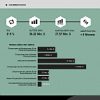
For a language pair such as English–German, the average throughput for translations is about 500 to 600 words per hour. This applies to continuous text of standard difficulty and without any special requirements. The throughput decreases for more demanding source material and whenever custom preferences need to be integrated (such as a client’s style guide or a strict character limit for social media posts). Very simple texts may take less time, but please try not to send your projects at the last minute and don’t underestimate the necessary effort.
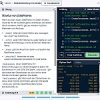
Now, maybe you’re thinking, “I bet AI does more words per hour.” This is true, but you know what else a machine does? It includes more errors in the translation! Examples for typical errors made by automated systems without oversight are found on my translation services page in the section Human vs. machine.
Most Frequent Questions
I get certain questions very often, so let me provide you with some answers below. Additional questions and answers are found on my FAQ page. If you don’t see an answer to your question or would like to discuss a specific project, please, get in touch via my contact form. Thank you!
How much do translation services cost?
Just like with many other products and services, there is not just one fixed price for all kinds of translations. Costs depend on various factors, such as type, scope and subject matter of the text, desired delivery date, file format, required software, style or glossary guidelines, and so on. My translation page has more details about these factors and my rates to help with your budget planning.
Can’t we just use “AI” now for our translation projects?
Well, the question is not whether we can but whether we should. When people talk about AI these days, they usually mean Large Language Models (LLMs), which have been trained with massive amounts of data and calculate plausibly sounding responses based on probabilities.
But “plausibly sounding” doesn’t necessarily mean correct or suitable for the target audience. These systems do not understand your texts and don’t have any sense for sentence patterns, puns, or emotional triggers. Therefore, LLMs may be able to provide you with acceptable translations in simple scenarios, but when it comes to more sophisticated texts with carefully crafted phrases, these systems fall short. Their translations are often literal, stiff, and erroneous – it’s just cookie-cutter output of a probability-based machine.
Think about what you’re hoping to achieve and whom you’re trying to reach with your translations, and ask yourself whether human expertise might not be the better choice after all. (Please, also see my AI policy.)
What about translations from German to English?
Usually, I only translate from English to German because it’s just easier and faster to write in your native language (German for me). At the end of the day, this also benefits your bottom line. While this mother-tongue principle is not always a hard rule, there are plenty of qualified native speakers for this language combination who can adequately translate your German texts with all their nuances into English. If needed, I’ll gladly forward your project request to some of my English colleagues.